
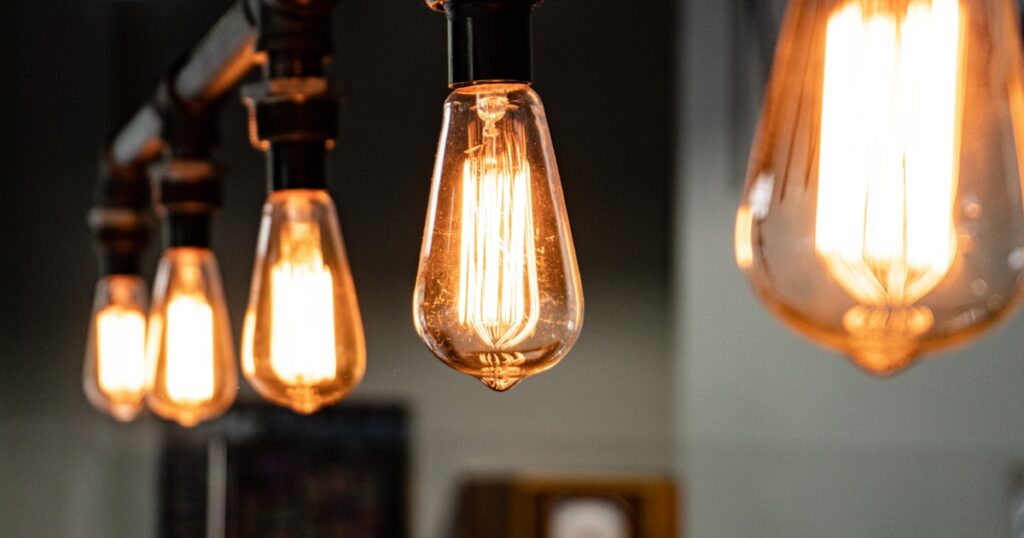
Three years into a full Philips Hue setup across a two-bedroom apartment, I swapped every bulb out for IKEA TRÅDFRI over a single weekend. Not because Hue stopped working. Because I did the math and felt genuinely embarrassed by what I’d been spending.
DigiDIY Verdict
⚠️ ONLY IF: you’re already 10+ bulbs deep in the Hue ecosystem
IKEA TRÅDFRI with the DIRIGERA hub covers the same rooms, runs Matter natively, and costs $180 less over 12 months. Hue’s reliability edge is real but doesn’t justify the premium unless you’re already locked in.
| Product | Price | Best For |
|---|---|---|
| Philips Hue White & Color Ambiance A19 Bulb (4-Pack Starter Kit) | $199 | Existing Hue owners adding rooms to a proven setup |
| IKEA TRÅDFRI Smart Bulb E26 White Spectrum 4-Pack with DIRIGERA Hub | $79 | Renters and budget buyers furnishing three or more rooms |
The Real Cost Nobody Puts in Their Comparison Chart
The Philips Hue vs IKEA smart lights budget conversation almost always starts and ends with bulb price. That framing benefits Hue’s marketing team, not your wallet.
Here’s what a honest 12-month accounting looks like for lighting three rooms. Hue: $199 starter kit (4 bulbs plus bridge), then roughly $54.99 per additional 2-pack to fill out a living room, bedroom, and kitchen. You’re at $360 before you’ve touched the bathroom. Add the Hue Bridge at $59.95 if you somehow bought bulbs first without realizing Bluetooth-only is now deprecated, and a lot of first-time buyers do exactly that. Total realistic spend: $380 to $420.
IKEA TRÅDFRI for the same three rooms: $79 for the 4-pack with DIRIGERA hub, then $17.99 per 2-pack for additional bulbs. Three rooms lands at $155 to $190 depending on fixture count. The DIRIGERA hub is included. Matter support is included. There is no subscription.
That $180 to $230 difference is not rounding error. It’s another smart home device, a mesh node, or just money staying in your account.
|
DigiDIY Pick IKEA TRÅDFRI Smart Bulb E26 White Spectrum 4-Pack with DIRIGERA Hub $79 The DIRIGERA hub now ships with full Matter over Thread support, meaning these bulbs connect to Apple Home, Google Home, and Amazon Alexa without a separate bridge per ecosystem. Real-world Zigbee range holds solid through two walls at around 30 feet. The limitation that still stings: white spectrum only, so if you want full RGB color, you’re paying extra for IKEA’s color bulbs, which narrows the price gap faster than the marketing suggests. As an Amazon Associate I earn from qualifying purchases. |
Setup: Where Hue Still Has the Edge
Philips Hue’s setup experience is legitimately good. Plug in the bridge, download the app, screw in bulbs, and you’re done in about 12 minutes. The app finds bulbs fast, room grouping is intuitive, and automations are accessible without reading a manual. For someone who has never touched a smart home device, Hue is the path of least resistance.
TRÅDFRI Setup Is Better Than It Used to Be, But Not Better Than Hue
The DIRIGERA hub setup improved substantially with the mid-2026 firmware update. Matter pairing now works on the first try in my experience, which was not true six months ago. Apple Home, Google Home, and Alexa all recognized the hub within a single setup flow. That said, IKEA’s Home smart app is still clunkier than Hue’s. Automation options feel like they were designed by a committee that hadn’t seen the Hue app. If you live in Apple Home or Google Home and treat IKEA’s app as a setup tool only, this stops mattering. But if you want native app scenes and scheduling that just work, Hue is cleaner.
Setup time for TRÅDFRI runs about 18 to 22 minutes for a first-time user. Not painful. Just not as polished.
Reliability: The Part That Actually Matters at 2am
I ran three smart lock ecosystems before landing on one that didn’t drop off my network overnight, so I take reliability seriously. I’ve had devices that work flawlessly for 90 days and then start acting like they’ve developed opinions about being controlled remotely.
Hue’s track record here is genuinely strong. In three years of daily use across 14 bulbs, I had two drop-offs. Both resolved with a power cycle. The Zigbee mesh Hue uses is mature and the bridge handles it well. This is not marketing copy. It’s what actually happened.
TRÅDFRI’s Weak Point: Early DIRIGERA Firmware
The original DIRIGERA hub had a known issue where bulbs at the edge of the Zigbee mesh would drop and require re-pairing, usually late at night when automations ran. IKEA pushed a firmware fix in Q1 2026, and I haven’t seen the issue since on my current setup. But if you bought a DIRIGERA hub before January 2026 and never updated, you may still be dealing with it. Check the firmware version. Anything below 1.9.4 needs the update before you trust this system with automations.
The broader point: Hue is more reliable out of the box with less babysitting. TRÅDFRI, post-update, is reliable enough for most households. If you’re running a vacation rental or a setup you can’t physically touch for months, Hue’s stability justifies a price premium that it doesn’t justify for a normal apartment.

Photo by User_Pascal on Unsplash |
DigiDIY Pick Philips Hue White & Color Ambiance A19 Bulb (4-Pack Starter Kit) $199 The 4-pack starter kit includes the Hue Bridge, which connects up to 50 bulbs over Zigbee with a stable 2.4GHz mesh that rarely drops. Setup runs about 12 minutes from box to first scene. The hard limit: $199 for four bulbs is genuinely difficult to justify when IKEA ships a comparable 4-pack plus hub for $79. As an Amazon Associate I earn from qualifying purchases. |
Philips Hue vs IKEA Smart Lights Budget: The Color Question
The 4-pack Hue starter kit includes full White and Color Ambiance bulbs. Every color in the spectrum, plus tunable white. IKEA’s standard TRÅDFRI 4-pack is white spectrum only, meaning warm to cool white but no color. This is where the Philips Hue vs IKEA smart lights budget math gets more honest.
IKEA does sell color bulbs. The TRÅDFRI color bulb runs about $19.99 each. Buy eight of them for three rooms and you’re at $160 in bulbs alone, plus $35 for the DIRIGERA hub. Suddenly the gap versus Hue narrows to roughly $60. Still cheaper, but not the slam dunk the white-spectrum price suggests. If color matters to you in every room, factor that in before you commit.
If you mostly use warm white anyway, and a lot of people do once the novelty of purple bedrooms fades, the standard TRÅDFRI white spectrum pack is all you need and the savings are real.
App Experience and Ecosystem Lock-In
This is where Philips Hue’s quiet 2026 change stings existing users. Bluetooth-only Hue setups, meaning bulbs you control without the bridge through the app, are now deprecated. Philips did not announce this loudly. If you bought Hue bulbs thinking you could use them bridge-free forever, you now either buy the $59.95 bridge or lose app-based control beyond basic on/off. I watched this happen to a reader who emailed me in March. He had eight bulbs, no bridge, and suddenly half his automations stopped responding.
Do not buy Hue without budgeting for the bridge. That is the real starter cost: $199 for the kit that includes it, or $59.95 added to whatever bulbs you already own.
TRÅDFRI’s Matter support genuinely changes the lock-in conversation. Because the DIRIGERA hub is Matter-certified, your bulbs live in whatever platform you choose. Switch from Google Home to Apple Home next year? Your bulbs come with you. This is the most underrated part of IKEA’s 2026 positioning and almost no review leads with it.
For anyone building a smart home from scratch right now, platform flexibility matters more than it did two years ago. Our guide to building a Matter-first smart home on a budget covers how to structure this so you’re not re-buying hardware every time you switch platforms.
Who Should Not Buy TRÅDFRI
If you already have 10 or more Hue bulbs, don’t switch. The migration cost in time, re-pairing, and replacing working hardware erases the savings completely. Hue’s automation engine is mature, scenes sync reliably across rooms, and the app is better. Stay where you are and just stop buying new Hue bulbs at full price.
If you’re running a professional installation for a client or a property you manage remotely, Hue’s reliability track record and better support infrastructure make it the defensible choice. The premium makes sense when you’re not the one troubleshooting a firmware issue at midnight.
For renters setting up two rooms or fewer, the calculus also shifts slightly. Under two rooms, Hue’s $199 starter kit is not outrageous, and the setup experience is genuinely smoother. Our smart home setup guide for renters who can’t drill or hardwire anything breaks down which systems make sense at each apartment size, and Hue makes the list for small setups where simplicity justifies the cost.
The Product I Actually Regret Buying
The Sengled Smart Hub Starter Kit. Bought it in late 2023 as a cheaper alternative to both Hue and TRÅDFRI. Looked good on paper at $49. The hub started dropping bulbs randomly after about three months, always the ones furthest from the hub, and Sengled’s app updates made the problem worse, not better. By month five, two bulbs had stopped pairing entirely. The replacement process was a two-week email chain. I returned what I could and ate the loss on two bulbs I’d bought separately.
The lesson is not that cheap is bad. IKEA is cheap and it works. The lesson is that unknown brands with proprietary hubs and thin support teams are where your smart home goes to die. Stick to Zigbee-based systems with real ecosystems behind them. Our breakdown of Zigbee vs Z-Wave vs Matter for smart home beginners explains why the underlying protocol matters more than the brand name on the box.
Philips Hue vs IKEA Smart Lights Budget: 12-Month True Cost Summary
Three rooms, white spectrum only, no color: Hue costs $380 to $420. TRÅDFRI costs $155 to $190. The gap is $190 to $230 in year one. In year two, bulbs don’t need replacing so the gap shrinks to zero unless you expand. But that year-one number is real money.
Three rooms, full color in every fixture: Hue costs $380 to $420. TRÅDFRI with color bulbs costs $215 to $250. The gap narrows to $130 to $170. Still meaningful, but less dramatic. The Philips Hue vs IKEA smart lights budget advantage for IKEA holds either way, just to different degrees.
For anyone thinking about expanding into smart plugs, sensors, or a full home automation setup after the bulbs are sorted, our complete smart home starter kit guide for under $300 maps out which devices to add in which order so you’re not buying things that don’t talk to each other. And if you’re running a Raspberry Pi alongside any of this, our best Raspberry Pi smart home projects that are actually worth finishing covers which integrations work reliably with both Hue and TRÅDFRI without a Home Assistant PhD.
Frequently Asked Questions
Does IKEA TRÅDFRI work with Google Home in 2026?
Yes. The updated DIRIGERA hub supports Matter, so TRÅDFRI bulbs connect to Google Home, Apple Home, and Alexa without workarounds. Setup takes under 10 minutes.
Is Philips Hue worth the price over IKEA smart lights?
Only if you need full-spectrum color in every room or you’re already 10+ bulbs into the Hue ecosystem. For most buyers furnishing a full apartment, TRÅDFRI is the smarter spend.
Can IKEA TRÅDFRI bulbs replace Philips Hue bulbs on the same bridge?
Not directly. TRÅDFRI bulbs use Zigbee and can pair to the Hue Bridge via third-party workarounds, but IKEA doesn’t support this officially. Use the DIRIGERA hub instead.
What happened to Philips Hue Bluetooth-only setups in 2026?
Philips quietly deprecated standalone Bluetooth control in early 2026. You now need the Hue Bridge for full app functionality, which adds $59.95 to any starter cost.
How much does it actually cost to light a three-bedroom apartment with Philips Hue vs IKEA?
Hue runs roughly $380 to $420 for three rooms including the bridge. IKEA TRÅDFRI covers the same space for $160 to $190 with the DIRIGERA hub included. That gap only grows at year two.
Bottom Line
IKEA TRÅDFRI with the DIRIGERA hub is the buy for anyone setting up smart lighting from scratch across more than two rooms on a real budget. Get the 4-pack starter, update the firmware before you do anything else, and live in Apple Home or Google Home instead of IKEA’s native app.
Buy Philips Hue only if you’re already invested in the ecosystem and replacing or expanding existing bulbs. The reliability is real. The color quality is better. The app is better. None of that is worth $200 extra if you’re starting from zero.
Skip any smart lighting system that uses a proprietary hub with no Matter support and a single-digit customer service team. You will spend more fixing it than you saved buying it.
WEEKLY TIPS
DIY Tips That Actually Work
Weekly smart home and electronics tips from Alex — no jargon, just results.
Free. No spam. Unsubscribe anytime.