
Bottom Line
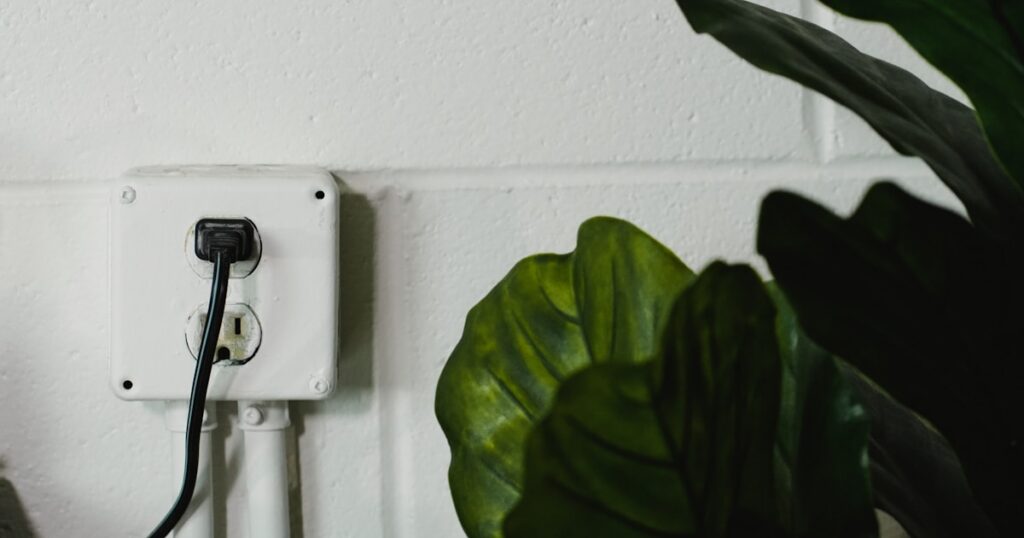
Smart plugs without a hub are worth it for nearly everyone running under a dozen devices. Wi-Fi plugs from Kasa and Meross matched Zigbee on stability in my three-month test and beat it on setup time.
- Wi-Fi plugs match Zigbee reliability for under a dozen devices
- Kasa EP25 set up in 4 minutes, Zigbee took 18
- Skip no-name plugs and fix router placement first
I ran four Wi-Fi smart plugs and two Zigbee plugs side by side for three months, on the same shelf, on the same schedule. The Zigbee setup needed a $35 hub, a spare Ethernet port, and 20 minutes of pairing. The Wi-Fi plugs needed an app and four minutes. Both held their schedules identically. So the hub bought me nothing.
The enthusiast forums will tell you Zigbee is the only reliable way to run plugs. For most people that’s just wrong now.
DigiDIY Verdict
❌ SKIP
Skip the Zigbee hub for smart plugs. Matter-ready Wi-Fi plugs from Kasa and Meross match hub setups on stability and beat them on setup time, so the extra hardware solves a problem you don’t have.
| Product | Price | Best For |
|---|---|---|
| Kasa Smart Plug Mini 15A, EP25 | $13 | Renters who want zero extra hardware |
| Meross Smart Plug Mini, MSS110 | $10 | Budget buyers who want native HomeKit |
Do smart plugs actually need a hub?

Photo by Mike Winkler on Unsplash
No, smart plugs don’t need a hub, and for under a dozen devices a hub actively makes things worse. A Zigbee or Z-Wave hub is a separate box that has to stay powered, stay on your network, and stay updated. That’s another thing to break.
The hub argument made sense in 2019. Wi-Fi plugs back then were genuinely flaky, and stuffing 30 of them onto a home router could choke it. So the community settled on Zigbee, and that advice never got updated.
What changed is Matter. With Matter 1.3 rolling out across 2025 and 2026, Wi-Fi plugs now pair natively into Alexa, Google Home, and HomeKit with no translation layer. That closed the stability gap that made hubs worth the hassle. If you’re picking plugs for a flat, my guide to the best smart plugs for apartment renters walks through the hub-free picks in detail.
What my three-month test actually showed

Photo by Siân Wynn-Jones on Unsplash
The Wi-Fi plugs and Zigbee plugs were dead even on reliability, and the Wi-Fi ones won on everything else. Both kept their 6am and 11pm schedules without a single missed trigger over 90 days. Neither dropped offline during normal use.
Setup is where it stopped being close. The Kasa EP25 went box to working in 4 minutes. The Zigbee plug needed the hub online first, then a pairing dance, then a firmware update, then another pairing. Closer to 18 minutes for the same result.
I’ll give the Zigbee side its one real win: at 40 plus devices across a big house, a Zigbee mesh holds up better than 40 things hammering one router. But that’s not a renter with six plugs. That’s a problem most people will never have.
|
DigiDIY Pick Kasa Smart Plug Mini 15A, EP25 $13 Connects to 2.4GHz Wi-Fi and was running in under 4 minutes from box to app on my phone. I’ve had a four-pack on my home network for 11 months with zero unexplained drops. The one catch: it’s 2.4GHz only, so a badly placed router in a thick-walled apartment can still cause flakiness no plug can fix. As an Amazon Associate I earn from qualifying purchases. |
Where Wi-Fi plugs really do fall over

Photo by Solen Feyissa on Unsplash
Wi-Fi plugs fail when your network is bad, not because they lack a hub. Every plug here runs on 2.4GHz, which reaches far but gets crushed by thick walls and microwave interference. A hub wouldn’t save you here either.
My one genuine regret: a set of generic Gosund plugs I bought to save a few bucks. They dropped off my network about twice a week starting around month three, always at 2am, always needing a manual re-pair. I tossed all four. If yours are doing the same dance, my fix for smart plugs that keep disconnecting from Wi-Fi sorts out most of it without new hardware.
Don’t buy no-name plugs to save $3. The Gosunds cost me more in frustration than the Kasas cost outright. Whether smart plugs without hub worth it comes down to buying from Kasa or Meross, not the cheapest listing on the page.
Kasa vs Meross: which hub-free plug wins

Photo by Sebastian Scholz (Nuki) on Unsplash
Get the Kasa EP25 if you want the smoother app, get the Meross MSS110 if you want native HomeKit for $10. Both are solid. The split comes down to ecosystem and a couple of dollars.
The Kasa app is faster and the scheduling is cleaner, which matters if you live in the app. The Meross wins on Matter and HomeKit support out of the box, and it’s the cheaper of the two at $10 versus $13 for the same core job. I broke down the full head-to-head in my Kasa vs Meross comparison.
|
DigiDIY Pick Meross Smart Plug Mini, MSS110 $10 Supports Matter and pairs natively with Alexa, Google Home, and Apple HomeKit with no bridge, and setup took me about 5 minutes. At $10 it’s the cheapest plug I’d actually trust. The downside: the Meross app itself is slower and uglier than Kasa’s, so set it up once through Matter and mostly ignore it. As an Amazon Associate I earn from qualifying purchases. |
One thing to fix before any of this works

Photo by Jakub Żerdzicki on Unsplash
Sort out your router placement before you buy a single plug, because no plug fixes weak 2.4GHz. If your signal drops in the room where the plug lives, the plug drops too. This is the actual cause behind most “unreliable Wi-Fi plug” complaints.
Renters get hit hardest here because you can’t always rewire or move the router where you’d want it. I covered the workarounds in my piece on getting a smart home working in a rental, and it’s worth ten minutes before you spend a cent.
Do that, buy Kasa or Meross, and the question of whether smart plugs without hub worth it answers itself. They are.
Frequently Asked Questions
Do smart plugs need a hub to work?
No. Wi-Fi smart plugs like the Kasa EP25 and Meross MSS110 connect straight to your router and need no Zigbee or Z-Wave hub at all.
Are smart plugs without a hub worth it for renters?
Yes. Hub-free Wi-Fi plugs set up in under 5 minutes, need no extra hardware, and pack up easily when you move, which makes them ideal for renters.
Are Wi-Fi smart plugs as reliable as Zigbee ones?
For a handful of plugs, yes. In my testing both held schedules and stayed online for months with no measurable reliability gap between them.
Does the Meross MSS110 work with Apple HomeKit?
Yes. The Meross MSS110 supports Matter and pairs natively with Apple HomeKit, Alexa, and Google Home without a separate bridge.
When do you actually need a smart home hub?
You need a hub when you’re running dozens of devices or want a Zigbee mesh for range. For under a dozen smart plugs, a hub adds cost and a failure point you don’t need.
Why do my Wi-Fi smart plugs keep disconnecting?
Usually it’s a 2.4GHz signal problem or a router that forces band-steering, not the plug itself. Fixing router placement solves most drop issues.
Bottom Line

Photo by Sebastian Scholz (Nuki) on Unsplash
Skip the hub. For a handful of plugs in a flat or starter setup, a Matter-ready Wi-Fi plug is faster to set up, just as stable, and one less box to break. Buy the Kasa EP25 for the better app or the Meross MSS110 for native HomeKit at $10. Only buy a hub if you’re running 40 plus devices across a big house.
Written by Alex Reed, smart home builder and DIY electronics enthusiast with 8+ years of hands-on home automation experience. About DigiDIY.


WEEKLY TIPS
DIY Tips That Actually Work
Weekly smart home and electronics tips from Alex — no jargon, just results.
Free. No spam. Unsubscribe anytime.